26 September 2026
Skilled people build a sustainable world
WorldSkills Shanghai 2026 reminds us that long-term investment in skills is vital for a more secure future.
Earlier this week, WorldSkills shared its vision for the next decade: a world where skills are valued as the building blocks of sustainable human and economic development. This week, across the Competition, skilled young people have shown how their talents are helping design, craft, and maintain a more secure, healthy, and prosperous world for everyone.
As Sonya Hill, WorldSkills Champions Trust representative for the Americas, says, “If we want to make the world more sustainable, who is going to do that? It will be the engineers and the technicians. Skills fill the gap between the goals policymakers are putting in place and how to actually achieve them.”
WorldSkills Competitions play a key role in making sustainable practices more visible and demonstrating how skills are essential to the long-term well-being of people and the planet. In the run-up to WorldSkills Lyon 2024, sustainability was integrated into the WorldSkills Occupational Standards. In Shanghai, sustainable practices are once again integral to the Test Projects across all 64 skill competitions.
From choosing greener materials to reducing waste, we look at three examples of sustainability in action.
Plumbing and Heating
Clean drinking water is fundamental to human health and prosperity. Yet the World Health Organization estimates nearly 2.2 billion people lack access to safe and clean drinking water. In their Test Project, Plumbing and Heating Competitors are asked to demonstrate how they can install long-lasting systems, reduce water distribution loss, minimize waste, and reuse materials.
Grant Stewart, Skill Competition Manager for Plumbing and Heating, celebrates the role his Competitors play in maintaining more sustainable water systems. He says, “If you can’t drink clean water, you get sick, you can’t go to school, you can’t learn. Skills are at the base of it all. I am proud to be a plumber and proud to be involved in skills and trades.”
Logistics and Freight Forwarding
Freight logistics is the transportation of goods and cargo by road, sea, air, and rail. The World Economic Forum estimates it accounts for nearly 8% of global emissions. Logistics and Freight Forwarding Competitors are asked to think about how to reduce that environmental impact during their Test Project. This includes considering how goods are transported, choosing appropriate routes and modes of transport, and thinking about end-of-life management and reverse logistics.
Declan Allen, Skill Competition Manager for Logistics and Freight Forwarding, is well aware of the need to balance the industry’s carbon footprint with the bottom line. He said, “If we want to be here tomorrow, we have to move things efficiently and sustainably today.”
He also sees green supply chains as a way to recruit talent saying, “Young people are very much aware of the need to protect the planet and creating green supply chains will help do this. So, it is a way to attract young people to this industry.”
Car Painting
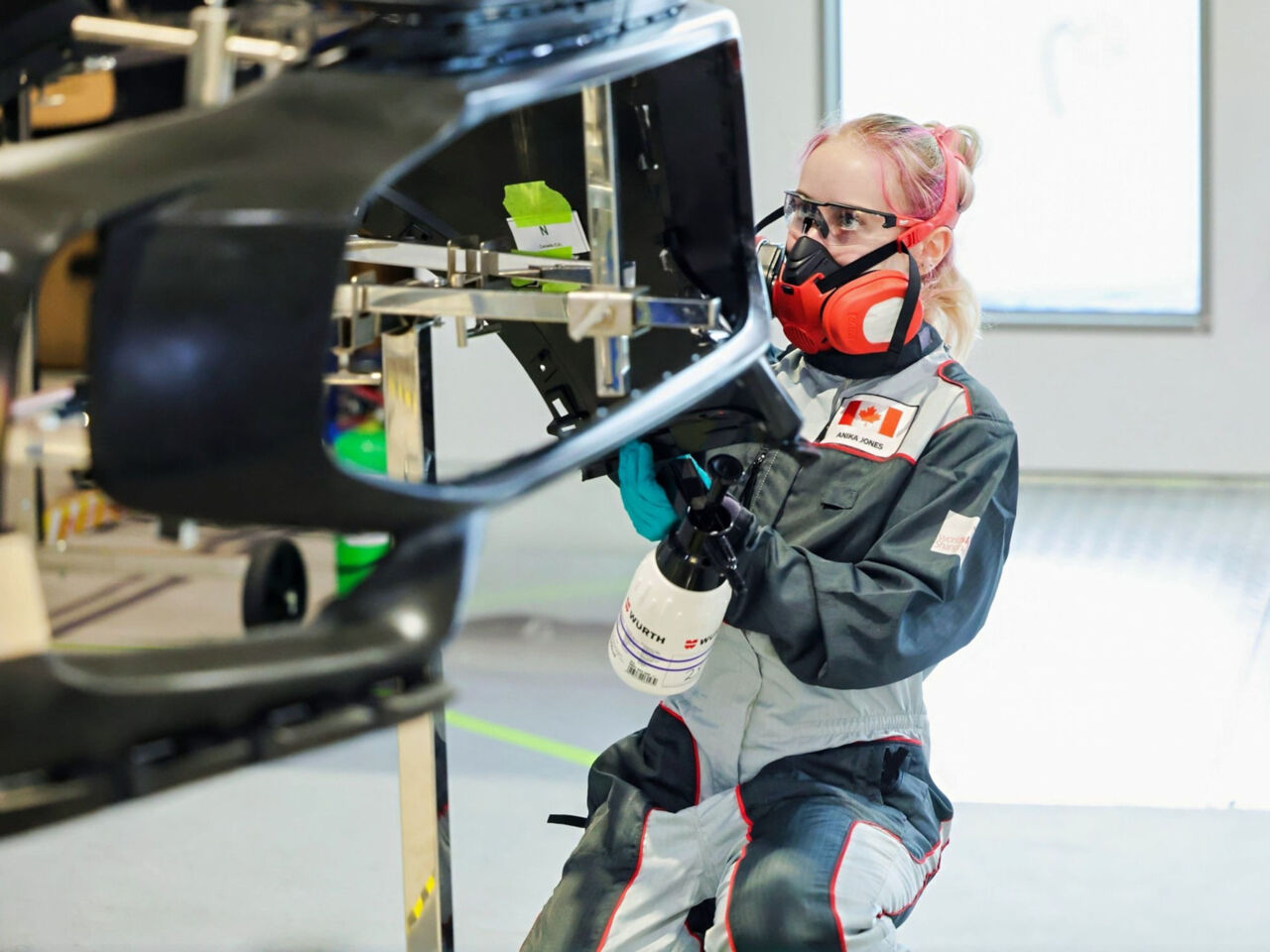
In Car Painting, the automotive paint shop is the most energy-intensive stage of the entire vehicle manufacturing process. During their Test Projects, Competitors are required to be mindful and precise with the materials they use and how they use them. They also have to show how to dispose of waste responsibly.
WorldSkills Global Partner Surventis, through its premium brand Glasurit, has been helping to integrate sustainable practices into Car Painting for many years. It supports the skill competition by providing more sustainable paint and by training WorldSkills Experts and Competitors in its application. On the last day of WorldSkills Shanghai 2026, it will present its Sustainable Practice Excellence Award to Competitors who demonstrate the most efficient use of materials and products during the competition.
Through their mastery of skills, Competitors are making it clear that the security of our future systems depends on them. In return, WorldSkills is building the frameworks and training to empower these young people, so that they use their skills for the long-term health of our communities and our environment.
Unami Dube, Standards Specialist at WorldSkills International, said, “By embedding sustainable practices into our 64 WorldSkills Occupational Standards, we are making it clear that skills and sustainability are one in the same.”
She continues, “We are saying to young people that if they want to achieve excellence in the workplace, then they must think about how their skill helps minimize environmental impact, reduce social inequity, and ultimately contribute towards human development. In this way, they are playing their part as responsible global citizens.”
Learn more about the skills on show at WorldSkills Shanghai 2026, and how they are helping build a better world.