5 November 2026
Working together for a global TVET agenda
At WorldSkills Conference 2026 in Shanghai, partners in the “Towards a Global TVET Agenda” initiative drove forward multilateral cooperation.
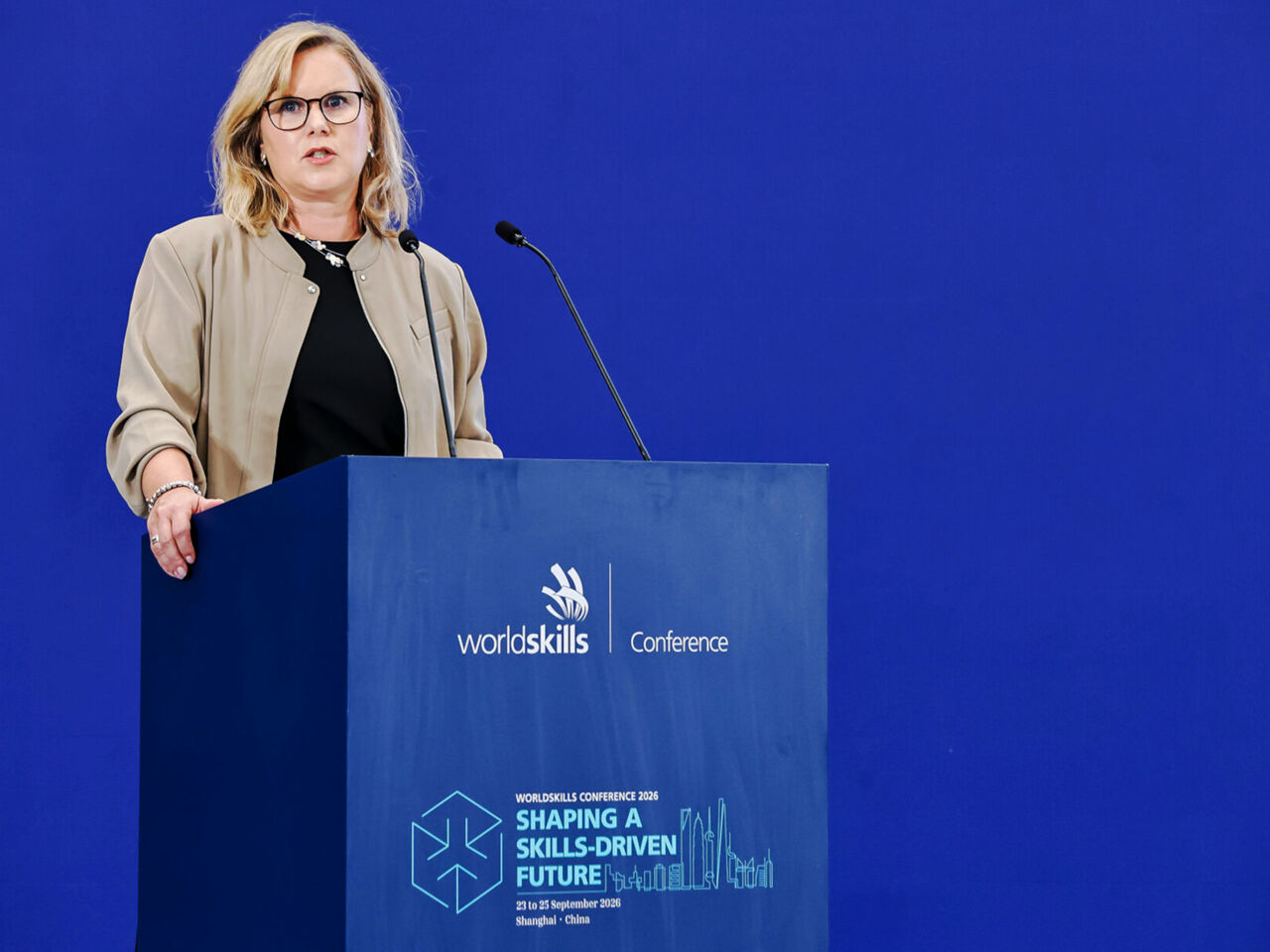
From 23 to 25 September, the global skills community came together in Shanghai, China, to shape a skills-driven future. WorldSkills Conference 2026 was the largest and most significant in the history of the movement. Over three days of plenary sessions, panels, side meetings, and sharing of best practice, more than 1,500 delegates heard from leading voices in Technical and Vocational Education and Training (TVET).
A ministerial meeting gathered 50 ministers and senior government representatives from across the world to address common obstacles in building skills systems that are inclusive, sustainable, and agile. At the same time, more than 1,400 young Competitors showcased excellence in their skills at WorldSkills Shanghai 2026, putting policy and practice side by side.
Across three thematic pillars – inclusion, innovation, and international cooperation – the Conference also became a platform for advancing the “Towards a Global TVET Agenda” (TGTA) initiative, helping it move from joint dialogue to joint action.
Launched in 2025 by Germany’s Federal Ministry for Education, Family Affairs, Senior Citizens, Women and Youth (BMBFSFJ), the TGTA aims to bring greater coherence to TVET efforts worldwide, strengthen international networks, and speed up the spread of effective, innovative approaches across regions. The initiative is coordinated by the Federal Institute for Vocational Education and Training (BIBB). Its partners are UNESCO-UNEVOC, the International Labour Organization (ILO), the Organisation for Economic Co-operation and Development (OECD), and the European Training Foundation (ETF), with WorldSkills International as an associated partner.
At a dedicated workshop on 25 September, TGTA partners presented flagship projects, exploring how evidence, innovation, and cooperation can be brought together in the work towards a global TVET agenda. The partners outlined four areas for action on which they will focus their efforts:
- Centres of excellence and innovation: exchange between countries on leading centres, at policy and practice level, including through skills competitions
- Knowledge sharing and capacity building: strengthening social partnership, work-based learning and lifelong learning, and backing TVET reform
- Policy dialogue: mutual learning on TVET reform across national and regional contexts
- Stronger TVET data: making data easier to find and compare, so policy decisions rest on evidence
The TGTA was also part of the Skills CoLab, a new pilot format within the Conference that arranged short, curated meetings between projects and delegates. Over the three days, delegates could speak directly with the TGTA team.
The initiative also aims to strengthen the position of TVET within the United Nations’ post-2030 agenda. Dr Catrin Hannken, Head of the Vocational Education and Training and Lifelong Learning Department at the BMBFSFJ, announced plans to bring additional partner countries into the initiative. She said that only by working with countries that share a drive for reform and a willingness to innovate can a global agenda be advanced.
A joint declaration between the BMBFSFJ and the United Nations Industrial Development Organization (UNIDO) was signed at the Conference, laying the groundwork for cooperation under the TGTA.