27 January 2026
The unifying language of skill
As the world gets ready to meet at WorldSkills Shanghai 2026, we celebrate the rich languages spoken among our community and explore the challenges and opportunities this presents a global skills movement.
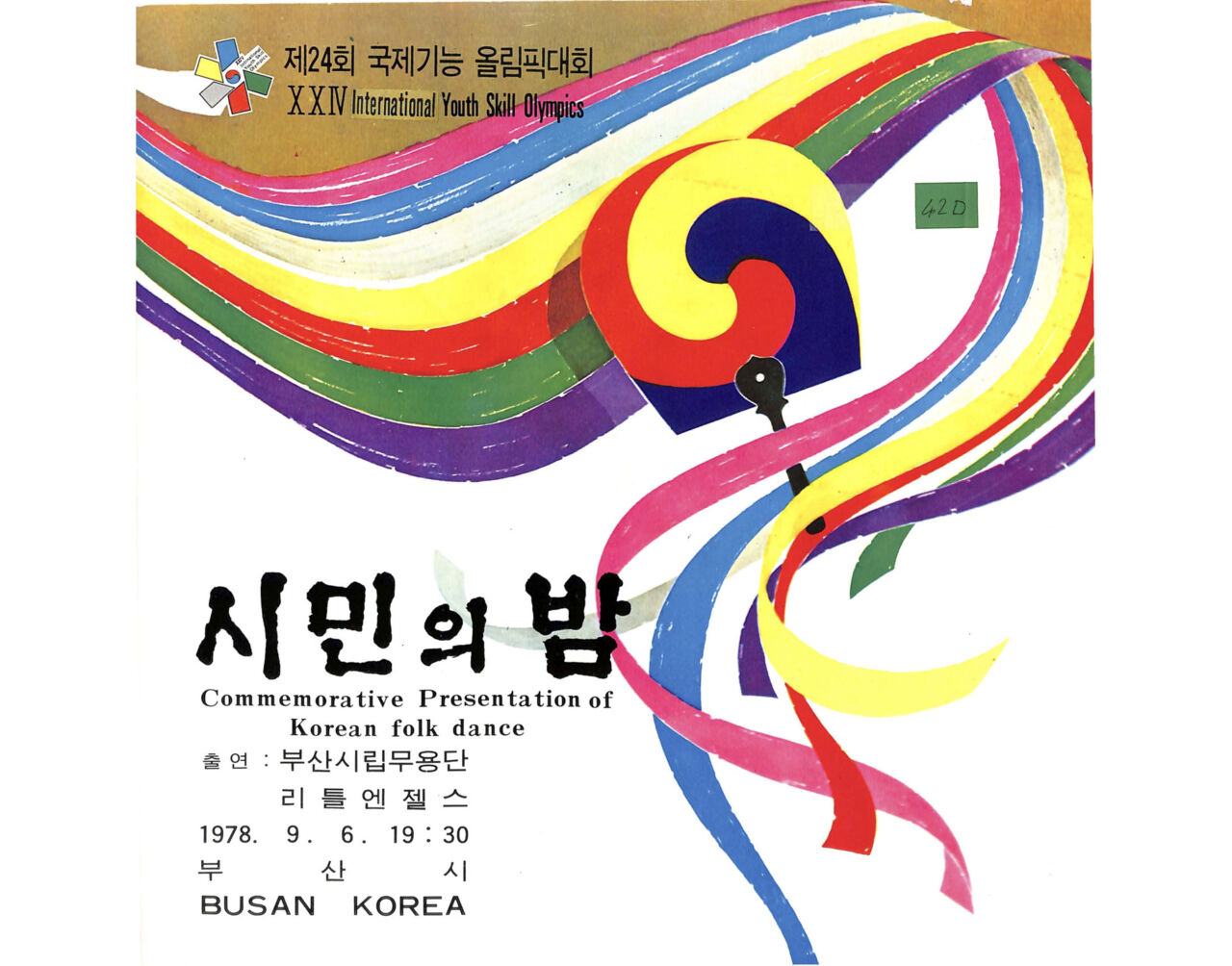
The cover from the official program of a cultural event held on 6 September 1978 during the 24th International Youth Skill Olympics in Busan.
This September at the 48th WorldSkills Competition, the exhibition halls at the NECC Shanghai will be filled with a wide variety of languages, as visitors, Competitors, Experts, and dignitaries arrive in China from more than 70 countries and regions.
This is a far cry from when WorldSkills was founded in 1950. In that early Competition, its two founding Members spoke Portuguese and Spanish. But as the organization has expanded, so has its linguistic landscape. Today, WorldSkills Members speak an estimated 50 to 60 different languages between them.
These many languages can be seen in person at the WorldSkills Museum and viewed online in the WorldSkills Archive. Between them, they house nearly 1,000 artifacts from almost every country and region across the membership. Posters, signage, interviews, and publications from the past 75 years reveal the breadth of languages and scripts that make up the WorldSkills community.
But nowhere is the diversity of language more obvious than within the skills workshops. Jane Stokie, Director of Skills Competitions, reflects, “There is something incredibly special when you hear these many languages spoken on the Competition floor. It is the sound of a global movement at work, and it is a powerful reminder of our wide reach and how far our impact extends.”
WorldSkills will be trialling the use of an AI-powered tool to translate Test Projects into a Competitor’s native tongue. It was a decision ratified at WorldSkills General Assembly 2025 and is an important and much-welcomed way to make the Competition more accessible for Competitors and Experts.
Away from the Competition floor, WorldSkills has put a number of measures in place to make interaction between Members and Partners as easy as possible. Plain English is the working language of the organization, meaning all communications are delivered in clear, simple wording and structure. Francis Hourant, President of WorldSkills, is himself a native French speaker. He reflects, “To date, the value we derive from the richness and diversity of our Members has more than compensated for the communication challenges we have encountered along the way. I am eager to see how technological advances can further improve our cooperation and facilitate technical and cultural dialogue between peoples."
Of course, among this multilingual organization, there is one language that unites every Member: the language of skills.
David Hoey, CEO of WorldSkills International, reflects, “A perfectly executed weld, a well-written line of code, or a flawlessly finished garment communicates skills excellence, without the need for translation. In this way, skills are a shared, unifying language that will help us build and shape a more sustainable future for all.”
Read more about the visitor experience at WorldSkills Shanghai 2026 or delve into the rich languages of our WorldSkills Archive.